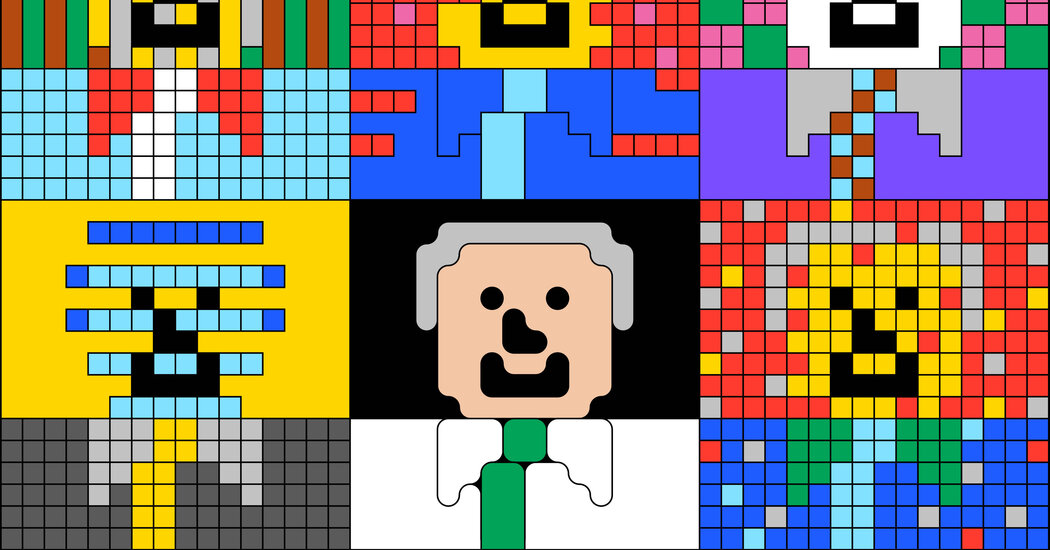
It started as a writing assistant. Jeremy Allaire, the C.E.O. of the stablecoin company Circle, trained an A.I. agent to think and write like him, feeding it his podcast interviews, his public writing and a corpus of internal communications.
He called it the “Jeremy Allaire skill.” The bot helped him compose drafts. And Allaire was impressed by how well the artificial intelligence captured the way he thinks and writes.
So impressed that he decided to let the bot talk to his more than 1,000 employees. Because while Allaire can’t meet with everyone, he realized that the A.I. version of him can.
“People can interact with the Jeremy Allaire skill on their own before they actually, you know, bring something to me,” he told DealBook, adding, “It’s available to everyone in the company who wants to have a dialogue with me.”
Across the business world, many leaders are experimenting with similar tools.
Consultants and executive coaches who don’t have the bandwidth to address every inquiry are referring some clients to their A.I. doubles. Harvard Business School professors have incorporated A.I. versions of themselves into courses and office hours. And executives are using their A.I. avatars to address employees in other countries in their own languages.
Whipping up an A.I. chatbot or avatar is easy. Allaire built his using Claude. A handful of start-ups provide interfaces that make it even easier and offer more control: Delphi takes your content and instructions and creates a voice and text chatbot that mimics you, while A.I. video generators like HeyGen and Synthesia will do the same for a digital avatar that copies your appearance.
“It’s just a new kind of artifact of your mind,” said Dara Ladjevardian, the C.E.O. of Delphi, which raised a $16 million round of funding led by Sequoia Capital last year. “The same way a book is, the same way a painting is, it’s a new way that people get to experience you.”
A.I. doubles
Lenny Rachitsky hosts a popular podcast about product management and writes a newsletter with more than 1.2 million subscribers. A lot of people want to pitch him or ask him for advice.
His A.I. double, Lennybot, now fields some of these inquiries. “I even tell them, ‘This is awkward to say, but you should actually ask Lennybot about this,’” he said. His chatbot has about 100 conversations a day.
When I called Lennybot, I asked for advice on launching a hypothetical peanut brittle company (there’s a bag of the candy on my desk). A voice that sounded much like Rachitsky asked me who my target customer was (I said children), and then disagreed with me (it argued I’m actually targeting their parents).
Rachitsky likes the bot version of himself enough that last year, he became an adviser to Delphi, the tool he used to create it.
Alisa Cohn, an executive coach who has worked with companies like Google, Microsoft and Pfizer, said she had long referred prospective clients who couldn’t afford her fee to resources like her podcast and book. Now she also points them to her A.I. double.
“I’m able to also say, ‘Try this A.I. avatar who might be a helpful almost like a collaborator with you as you’re going through this journey,’” she said.
Greg Buzek, the founder and president of IHL Group, an advisory firm specializing in retail and hospitality, provides research for enterprise customers, but has used his A.I. double to create a subscription for individual users. In January, he launched Just Ask Greg AI, a chatbot version of himself that for $30 a month will chat with you about some of that same research.
Some start-ups see cloning expertise in this way as a potentially profitable niche. BuddyPro, one start-up that creates A.I. doubles, puts it like this on its website: “If AI replaces expert advice, make sure it’s YOUR AI doing the replacing.”
Another early start-up, Sensay, plans to help companies capture the knowledge of departing employees by creating an A.I. version of them that sticks around as a sort of consultant.
Virtual stand-ins
Sean Greenhalgh, who manages digital content at the cloud storage company Wasabi, first used an A.I. avatar to solve a practical problem: He’s based in Boston. Wasabi’s head of sales, Jon Howes, is based in Switzerland. That made it difficult to coordinate filming a video of Howes for an internal meeting in Dallas.
So Greenhalgh built an A.I. video avatar of Howes, putting the rather staid, British executive on top of a horse, in a ridiculous cowboy costume.
It was a joke, but the use of A.I. avatars caught on at the company. When a marketing executive lost her voice at the same conference, she asked Greenhalgh to make her an A.I. avatar. About a year later, she used it to address the Tokyo-based sales team in Japanese. And Wasabi’s chief marketing officer recently “presented,” via a video of his A.I. avatar, at a board meeting he could not attend.
“It is kind of a fun way to say, hey, I can’t be there, but I sent my avatar,” Greenhalgh said.
Harvard Business School is using chat and video avatars of its professors in an online boot camp, called Foundry, that it launched in April. Students can pull the A.I. versions of H.B.S. professors into a group text chat to help advise them on their start-up ideas.
They can also practice their pitch to customers or venture capitalists with A.I. video avatars that look like the professors. The avatars ask follow-up questions and dispense advice based on both their own expertise and a body of Harvard Business School research and frameworks.
Elise Bates, the managing director of the program, said the A.I. avatars gave students access to “low-stakes reps that they don’t get before they talk to a real investor.”
Not quite a substitute
Lou Shipley, a former technology C.E.O. and a senior lecturer at H.B.S., teaches more than 500 students a year, and he has limited office hours. So he tried to offer his A.I. double for student meetings. “That didn’t go very well,” he said. “They actually want to meet me.”
Adam Dorrell, the C.E.O. of CustomerGauge, which makes software for measuring customer sentiment, had a similar experience: He trained an A.I. double with about two million words of his content, and was impressed with the result. “I thought this is like magic,” he said. “This is really saving loads of time.”
Dorrell envisioned using the A.I. version of himself to answer presale queries and to respond when someone asked to pick his brain. But it didn’t take off. “It seems that human interaction is still a thing in 2026,” he said.
Similarly, avatars that replicate someone’s appearance can be amusing and novel, but still fall somewhere in the uncanny valley. “My wife doesn’t like it,” Shipley noted of the avatar version of himself that appears in the Foundry course.
Delphi’s Ladjevardian argues that thinking of these bots as substitutes for person-to-person interaction is misguided. “ChatGPT and Claude and Gemini and Perplexity are teaching people to learn and read through back-and-forth conversation,” he said. “I think people will have to adapt.”
In other words, in a world where fewer people have the patience to read your book, listen to your podcast or pay attention during your all-hands meetings, an A.I. double can work as sort of an elaborate, animated index to serve up the information on demand.
That’s one way Jeff Bussgang, a general partner at Flybridge Capital, uses his A.I. bot with the students he teaches at Harvard.
“I load up all of my best advice, in the form of three books, 100 H.B.S. case studies and a corpus of 20 years of blogging about the types of questions that my students typically ask me,” he said of his A.I. double.
Bussgang is pleased with the results. Sometimes, when a student emails him a basic question, he first sends back a link to his bot’s response. With that out of the way, he and the student can talk like humans.
IN CASE YOU MISSED IT
The labor market extended a strong streak. The U.S. economy added 172,000 jobs in May, topping economists’ forecasts, according to data released by the Department of Labor on Friday. With revisions, March and April added 93,000 more jobs than previously reported.
Pre-owned luxury watch prices are rising again
It has been more than three years since skyrocketing valuations for used luxury watches abruptly plummeted back to earth, ending a period of intense speculation. Now the market is finally showing signs of recovery.
Pre-owned watch prices increased 4.9 percent last year, according to a Morgan Stanley report based on an index created by WatchCharts, a data provider that tracks 300 watches from 10 major brands.
Charles Tian, the founder and C.E.O. of WatchCharts, has been keeping close tabs on every turn of the secondary market. He talked with DealBook’s Sarah Kessler while wearing a 2003 Patek Philippe watch that displays the month, day of the week, date and current moon phase.
What is driving the uptick in prices on the secondary market?
The pre-owned market was in this big decline from 2022 to 2025. Meanwhile, on the primary side, with inflation, currency exchange rate issues and the rising cost of gold, we were seeing significant retail price increases. With the retail prices going up and secondary prices going down, it created better value opportunities.
Is there consensus on what caused the big crash in 2022?
It started off with stuff like the Rolex wait lists, where people were hearing that if you were lucky enough to get one, you could sell it on the secondary market for double or triple the price.
So you got a lot of speculators. A lot of people were borrowing money to buy these watches. And prices just went absolutely insane. In the first quarter of 2022, the prices of these hype watches rose by, on average, more than 20 percent.
You don’t think this recovery is based on the same sort of speculation?
I don’t think you see that sort of broad-based speculation this time around. There’s definitely still hype. But you don’t see this broader messaging of “Watches are a great investment that anyone should invest in, even if you know nothing about them.”
How should people think about the market?
Buying and selling watches is not a very efficient market. It’s not something you can do very quickly. And even if you’re making money on each watch, if you accidentally buy just one fake watch, you’d wipe away all your profits.
Rolex launched its own pre-owned program right around the time of the crash. Why?
Historically, there’s been a stigma against pre-owned watches because retailers would secretly dump inventory that they couldn’t sell into what is called the gray market. If a watch sat in a shop for a long time, and they couldn’t get rid of it, they would just sell it for like, you know, 50 cents on the dollar.
Rolex was really the first brand that made a big effort with this broad-based pre-owned program. It was, I think, mainly motivated by authenticity concerns. Because Rolex is the most-faked watch in the world.
Do you think that we can infer anything about the broader economy by what’s happening in secondary watch sales?
There’s been this term passed around the past few years — the K-shaped economy — and I do think growth in the watch market is along the same trend. People with enough disposable income to spend five figures on a watch every single year, it does seem like that base is potentially growing.
Quiz: C.E.O. pay
This question comes from a recent Times article. Click an answer to see if you’re right. (The link will be free.)
Median pay for the highest-paid chief executives in publicly traded companies jumped 35.8 percent in the past year., according to the research firm Equilar. Elon Musk was the best-paid chief executive, making $132.3 billion. That was 2.5 million times as much as the typical Tesla employee.
Elon Musk was paid how many times as much as the second-highest-paid chief executive, Dylan Field, the Figma C.E.O.?