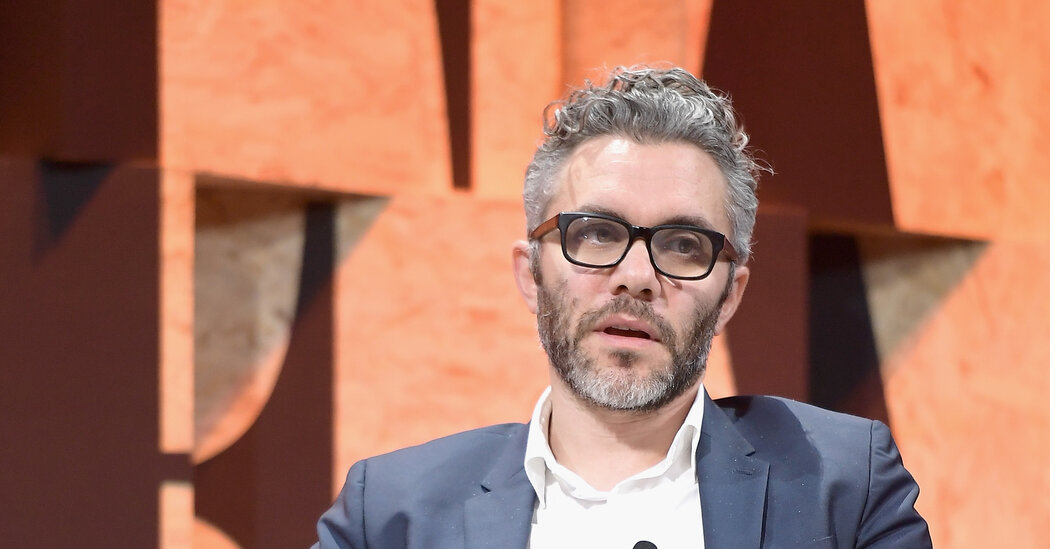
Nick Bilton, the new executive producer of “60 Minutes,” moved to shore up support of his demoralized staff on Thursday, writing in a memo that the program “will never be instructed by the ownership” of CBS News on its reporting.
His comments, delivered in an email to staff that was obtained by The New York Times, came as questions swirled about the future of the program’s three remaining correspondents, Lesley Stahl, Jon Wertheim and Bill Whitaker. All three have been deliberating on whether to remain on the show in the wake of the firing of their longtime colleague, Scott Pelley, according to two people familiar with the matter.
Ms. Stahl, Mr. Wertheim and Mr. Whitaker did not immediately respond to requests for comment.
Mr. Bilton wrote in the memo that he had consulted with the remaining correspondents in recent days, and that they were “core to this show’s success.” Mr. Bilton dined with Ms. Stahl on Wednesday evening, according to two people familiar with their plans.
Mr. Bilton said that Maria Gavrilovic, a longtime producer who had worked extensively with Mr. Pelley, had been elevated to a senior role and would “be by my side.”
“60 Minutes,” the country’s top-rated news program, has been embroiled in crisis since last week, when Bari Weiss, the CBS News editor in chief, fired the show’s leadership team and two on-air correspondents and installed Mr. Bilton, a tech journalist and filmmaker with no broadcast experience, as its new head.
The overhaul fueled fears among some of the show’s journalists that CBS News would be compromised by the influence of Ms. Weiss’s boss, the Hollywood mogul David Ellison, who purchased CBS last year.
Mr. Pelley and the other fired correspondents, Sharyn Alfonsi and Cecilia Vega, said they had experienced editorial interference under Ms. Weiss’s reign. CBS has denied those allegations, and Mr. Bilton wrote on Thursday that he would “be guided solely and always by what makes the best piece for our viewers.”
Mr. Bilton’s email struck a more conciliatory tone than his comments in an earlier, more explosive encounter with his new staff. On Monday, he convened an introductory meeting at the show’s offices and announced that technology was rendering their program obsolete, warning that “broadcast is an ice cube that is melting.”
In response, Mr. Pelley tore into Mr. Bilton, saying that he had “slender qualifications” for the job and would “never be welcome.” Mr. Pelley also accused Ms. Weiss of “murdering ‘60 Minutes.’”
Mr. Pelley’s lacerating comments were applauded at the meeting by the program’s staff. But they infuriated Ms. Weiss and her leadership team, and Mr. Pelley was fired on Tuesday evening. In a formal termination letter, Mr. Bilton told Mr. Pelley that he had behaved “with remarkable incivility and contempt.”
The ouster of Mr. Pelley deeply rattled the staff at “60 Minutes,” where he had been a correspondent for decades. The mood in the news program’s offices has been solemn, according to a person familiar with the matter.
On Thursday, Mr. Bilton tried to move past that bitter period, assuring the staff that “the foundation of ‘60 Minutes’ is its journalistic independence.”
He also pledged not to drastically change the basic format and inner workings of the show, an effort to assuage concerns from the staff that he might seek to overhaul the program.
“Sunday night works,” he wrote. “It’s the best hour of television journalism anywhere.” He praised the famously rigorous “scheduled screenings,” “detailed script work” and the “long format of the pieces.”
The new season of “60 Minutes,” the rare television news show that is both prestigious and lucrative, is set to begin in September.
“It’s been a hell of a first week,” Mr. Bilton wrote. “Let’s get to work.”