Subscribe to The Y’all — a weekly dispatch about the people, places and policies defining Texas, produced by Texas Tribune journalists living in communities across the state.
An infestation of the flesh-eating flies has been confirmed in South Texas, setting off alarm bells for the state’s cattle industry.
A sample from a 3-week-old calf from La Pryor in Zavala County tested positive for the country’s first case of New World screwworm, the U.S Department of Agriculture Secretary Brooke Rollins said during a June 3 news conference about the case.
There have been no other detections so far.
The USDA said in a social media post earlier that it had already activated personnel on the ground and were working with local partners. The federal agency also said that issues with screwworms shouldn’t immediately cause food supply chain issues, as screwworms do not infect meat, fruits or vegetables.
However, an outbreak of screwworm threatens to do $1.8 billion in damage to Texas’ economy alone, according to a U.S. Department of Agriculture estimate. This potential fly pandemic could also increase already record-high beef prices nationwide, given the state’s importance to the cattle industry.
Here is a breakdown of why the cattle industry and government leaders are concerned about a parasitic fly:
What is the New World screwworm?
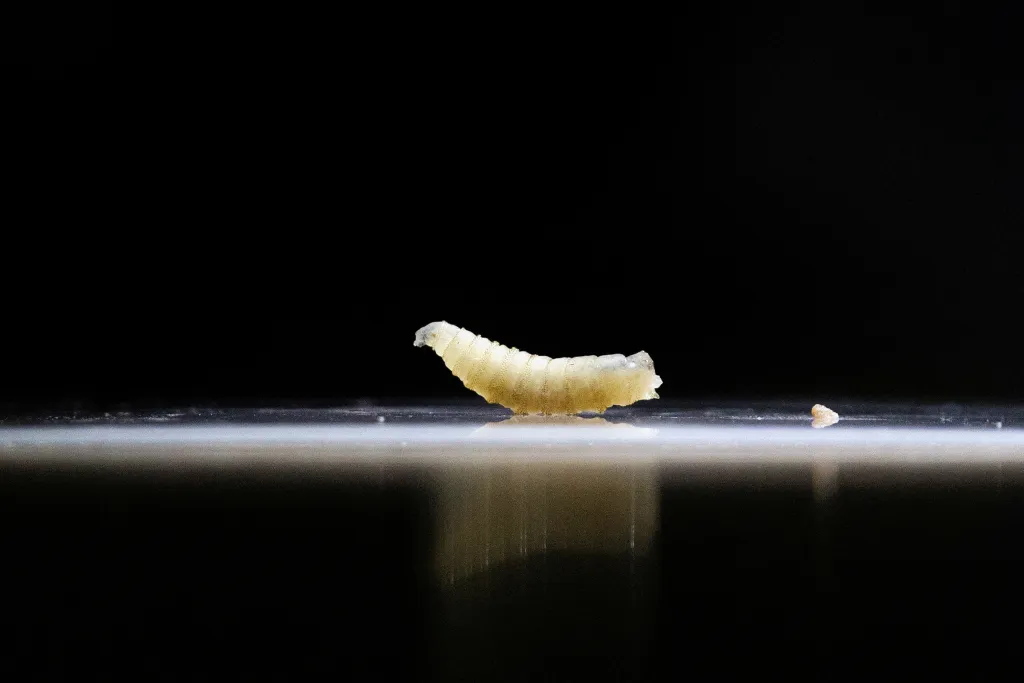
The New World screwworm is a type of blowfly that lays its eggs in the flesh of living animals rather than dead ones. Cuts as small as a tick bite may attract a female fly to lay her eggs. One female can lay 200 – 300 eggs at a time and may lay up to 3,000 eggs during her 10- to 30-day lifespan.
The eggs hatch into maggots that burrow into the wound to feed on the living flesh. The larvae in their final stage develop little hooks and dig deeper into the flesh, hence the name screwworm. After feeding for about seven days, larvae drop to the ground, burrow into the soil, and emerge as adult screwworm flies, repeating the cycle of infestations.
Multiple infestations are common with multiple stages of larva in one wound, sometimes leading to a “feeding frenzy” resulting in rapid tissue damage.
Most screwworm infestations occur in mammals, like cattle, pets, and wildlife, but they can also occur in people.
New World screwworm is typically found in South America and parts of the Caribbean. However, the fly has steadily moved northward from South America, through every country in Central America, and into Mexico, since 2023. Federal and Texas officials started monitoring cases the following year.
Why are ranchers and agriculture leaders so concerned?
Screwworm in the flesh of an infested animal will cause a lot of damage to the wound, as flies repeat a cycle of flying into the wound, laying eggs, and making the wound bigger, leading to illness and death.
Even if the animal survives, there’s usually extensive damage to the hide and to the health of the animal.
Cattle are particularly susceptible to screwworm due to their inability to protect an open wound, and their large frame can allow eggs to develop in multiple locations from a single cut.
“Texas livestock producers and all Texans must now be vigilant in their efforts to manage and combat the invasive pest,” Farm Bureau President Russell Boening said in a statement after screwworm had been confirmed in Texas.
Though screwworm was eradicated in the 1960s, the U.S. experienced a resurgence of the pest from 1972 to 1976. A screwworm outbreak in the U.S. infested tens of thousands of cattle across six states, cost tens of millions of dollars to contain, and was only defeated after a massive eradication effort.
U.S. producers have not treated livestock for screwworm in more than 40 years, putting the future of the industry on shaky ground.
Texas leads the U.S. in cattle production, bringing in $15 billion a year to the state
How do you stop these flies?
In an effort to prevent its spread, the USDA shut down the southern border to live animal imports in May 2025, preventing cattle from Mexico from entering the U.S. and limiting the supply of cattle in Texas.
The federal government has also invested $100 million into research, traps, and mounted patrol officers known as tick riders at the border.
U.S. officials are working with officials in Mexico and Panama to eradicate the screwworm again, using the sterile fly method. This practice consists of producing male sterile flies to have them reproduce unviable eggs with female flies who can only mate once in their lifetime.
At the time of their spread from Central America into Mexico, there was only one sterile fly production facility, located in Panama. Since then, U.S. officials have helped launch another in Metapa, Mexico, which is expected to open later this month, and are building another in Edinburg, Texas, which Rollins said is slated to open in fall 2027.
They’ve also launched two fly dispersal facilities, which help distribute sterile flies in needed areas, in Tampico, Mexico, and Edinburg. The USDA has already been dispersing sterile flies in South Texas, within 50 miles north of the border.
In response to the first confirmed case, the USDA implemented a quarantine zone, controlling the movement and surveillance of animals in the area.
Officials are also increasing trapping and surveillance for screwworm along the border, just outside the 50-mile dispersal area, and are ramping up surveillance and monitoring of wildlife.
What to look out for?
Animal experts say continual and regular monitoring and evaluation of all livestock is important during a screwworm outbreak.
Cattle producers and pet owners should be alert for a foul-smelling wound with visible maggots, animals biting or licking at wounds, lesions, and unusual restlessness or lethargy.
The best way to identify screwworm larvae is by the spikes that protrude from the body and wrap around them.
The USDA said residents near the affected areas should check their pets for signs of screwworm infection, which include infected wounds and screwworm eggs or larvae.
Treatment for screwworm often involves the manual removal of larvae, cleaning and dressing the wound and prescribed pesticides by a veterinarian.
Those who potentially see a screwworm infestation are recommended to report it to a local veterinarian or wildlife biologist.
“If we all work together and follow the animal treatment protocols and movement restriction guidance, there is no reason to believe that this incursion will result in an establishment of the pest in our country,” Rollins said.
Source link