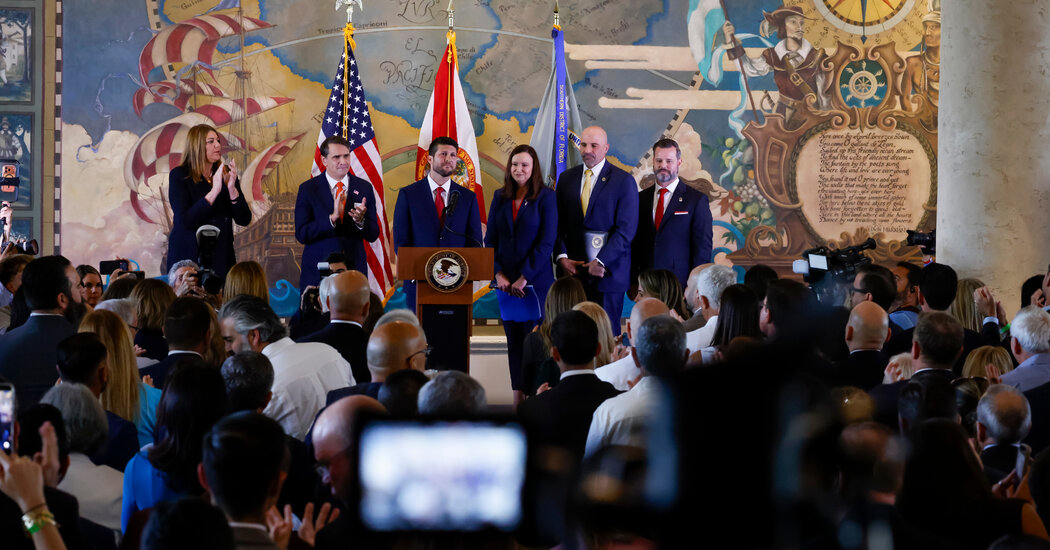
Florida on Monday became the first state to sue OpenAI over claims that ChatGPT posed a risk to children and that the company had failed to warn the public of dangers posed by the chatbot, adding to a growing backlash against artificial intelligence.
In the 83-page lawsuit, which was filed in Florida’s 10th Judicial Circuit, the state said OpenAI had built “a dangerous online product where harmful information such as tips on eating disorders, self-harm and mass murder are readily available, including to young children.”
The company and its chief executive, Sam Altman, had engaged in negligence and violated Florida’s prohibition on unfair and deceptive practices, the state added.
“They have chosen profit over public safety,” said Florida Attorney General James Uthmeier, a Republican, at a Monday news conference. He added that the company and its chief executive could be liable for up to billions of dollars in damages or penalties.
The lawsuit is the latest example of intensifying scrutiny over the effects of A.I. OpenAI, Anthropic, Google and other companies have faced tough questions about the negative effects of their popular chatbots, including a series of lawsuits over children who interacted with chatbots before they died by suicide.
More broadly, policymakers and voters alike have grown increasingly worried about the fallout from the widespread rollout of A.I., including the potential for skyrocketing energy prices from powering the technology, as well as its potential to put swaths of the population out of work.
Florida Governor Ron DeSantis, a Republican, proposed a sweeping bill to rein in A.I. last year. But his legislation fizzled when it failed to gain enough support with the state’s House Republican leadership.
Mr. Uthmeier started an investigation into OpenAI in April, citing concerns that ChatGPT had probably been “used to assist the murderer” in a deadly 2025 shooting at Florida State University. He also pointed to worries about the product’s effect on children.
“As big tech rolls out these technologies, they should not — they cannot — put our safety and security at risk,” Mr. Uthmeier said in a video announcing the investigation.
A spokeswoman for OpenAI did not immediately respond to a request for comment.
This is a developing news story and will be updated. Check back for updates.
Kirsten Noyes contributed research.