Geoff Bennett:
In 2024, massive pro-Palestinian protests swept college campuses across the country, including at Columbia University.
As the Trump administration intensified its immigration enforcement and deportation efforts, several noncitizen student protesters were taken into ICE detention. One of them was detained for more than a year.
Lisa Desjardins has more.
Lisa Desjardins:
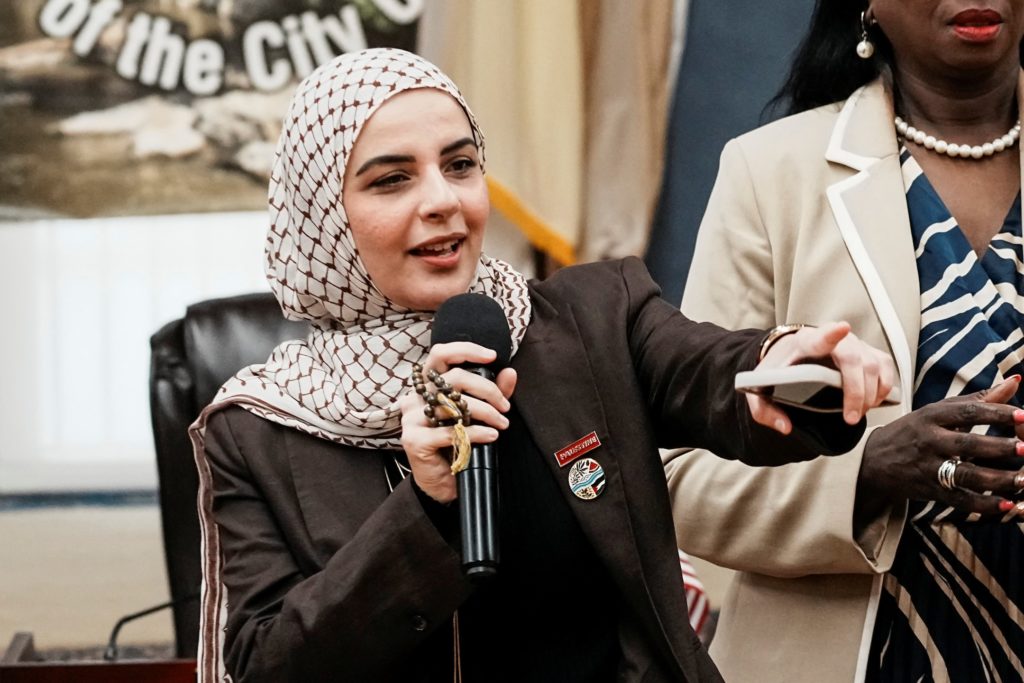
Leqaa Kordia arrived in the United States in 2016 on a tourist visa from the West Bank to reunite with her mother, a U.S. citizen living in New Jersey. She enrolled in English school, started working as a waitress and applied for her green card in 2017 through a family petition.
But that application did not give her a legal status to stay in the country, and she says she unknowingly became undocumented. In 2024, Kordia participated in the pro-Palestinian protests at Columbia University. She was arrested and not charged.
Then she was detained by Immigration and Customs Enforcement nearly a year later. She was in detention in Alvarado, Texas, from last spring until this March, as immigration courts decide her fate.
Leqaa and her lawyer, Sarah Sherman-Stokes, join us both now.
Thanks to both of you.
Leqaa, you came here 10 years ago. Your visa ran out in 2022. But I want to start with your hopes. You hope to get a green card. Tell us, first of all, why do you want to become a U.S. citizen?
Leqaa Kordia:
Well, I ran out of — from a country that’s under occupation. I grew up under fear all the time.
I grew up separated from my own mother all these years. I always say that I didn’t actually experience freedom until I came to the United States.
Lisa Desjardins:
You were detained for a year. We do have some video of when you were released. And in that video, you can see your emotion. You can see your relief from that day. What was that like when you were in detention?
Leqaa Kordia:
First of all, we were overcrowded. So, if you want to sleep, like, I — for example, I slept on the floor for three months surrounded with cockroaches, bugs, and all of that.
For food, it’s literally inedible.
Lisa Desjardins:
Can you talk about the health care there and the impact on you now from detention?
Leqaa Kordia:
So health care, over there, it’s almost zero. The fever that I had that was very, very bad, to the point that I literally felt like I’m going to die this night, I was reciting my prayers. I was asking God for forgiveness, which, after a few days, I suffered my first seizure ever.
Doctors said that because of lack of proper nutrition, lack of sleep and constant stress. Now I’m diagnosed with epilepsy after suffering my second seizure on April 30. I cannot drive. I cannot swim alone. I cannot hike alone.
So many things that used to make me feel free, now I can’t do it. Now I have to stay on a specific diet, taking heavy anti-seizure medication every day. The government, ICE literally messed up my health.
Lisa Desjardins:
You mentioned prayer. You clearly left detention changed by it. What was it like trying to practice your faith in detention?
Leqaa Kordia:
My religious rights were often violated. My simple, basic religious rights, as eating halal foods, for example, like having a clean, quiet place to pray and to perform prayers. They were all violated. I didn’t find the Holy Koran.
I didn’t find anything. They didn’t have hijabs for girls who want to perform prayer, but they’re not wearing hijabs. I kept asking about hijab actually for 15 days.
Lisa Desjardins:
Your detention and release in some part have made headlines because you have been a vocal protester.
DHS gave us this statement about you, and they did mention that they said you’re detained because your visa ran out.
But they went on and they wrote: “Previously, in April of 2024, Kordia was arrested by local law enforcement for her involvement in pro-Hamas protests at Columbia University in New York City. She was also found to be providing financial support to individuals living in nations hostile to the U.S. The facts of this case have not changed. Leqaa Kordia is in the country illegally.”
Now, no charges were filed against you for the protest or the financial support.
I want to ask your attorney, Sarah, how do you respond to this DHS statement, including the notion that she was supporting Hamas?
Sarah Sherman-Stokes, Attorney For Leqaa Kordia:
The government has had more than a year to provide any kind of evidence that would back up this kind of false and, frankly, dangerous allegation, and they have failed to do so.
Leqaa has been providing in the past money to her beloved family members. Many immigrants send remittances to their family members abroad, just like Leqaa did. Leqaa was punished not because she overstayed a visa. Leqaa was punished by the government because she spoke out in support of Palestine.
Lisa Desjardins:
Sarah, can I ask, what’s your evidence that she was targeted because she was Palestinian?
Sarah Sherman-Stokes:
Because that’s what the government has said. They have made these false allegations, false and unsubstantiated allegations that she is — quote — “pro-Hamas.” There is absolutely no evidence. They have completely abandoned those arguments in court.
They like them for press releases because they garner a lot of attention. But, in court, the government has offered absolutely no evidence to support that assertion.
Lisa Desjardins:
Leqaa, you are out right now on a $100,000 bond. That is a very high amount to be asked for. What is your response to DHS and the way that they say you deserve to be deported?
Leqaa Kordia:
I mean, to be imprisoned for a whole year simply for practicing my freedom of speech and to be accused of horrific things that I have nothing to do with, it’s outrageous.
Lisa Desjardins:
You still were here in an undocumented status. And there are many Americans who would say you should have left and if you wanted a green card applied for it overseas. Why should you be allowed to stay?
Leqaa Kordia:
Simply because, if I went back, there is a high possibility of jailing me, even killing me back in Palestine or what is so-called Israel, where they want to deport me, actually.
There is a high risk on my life. Really terrified of the idea.
Lisa Desjardins:
Because you’re a protester here or why?
Leqaa Kordia:
Because I’m a protester, because I’m outspoken and because I’m Palestinian.
Lisa Desjardins:
And Sarah?
Sarah Sherman-Stokes:
So, in fact, the immigration judge held that it is more likely than not that the Israeli government will persecute Leqaa if she is removed to Israel, which is where the government wishes to remove her.
Lisa Desjardins:
And one last question for me.
Leqaa, you grew very close with many of your fellow detainees, some of them still in detention. What do you want to say to them?
Leqaa Kordia:
Stay strong, stay hopeful. We didn’t forget about you. Keep fighting. Keep dreaming. You didn’t do anything wrong. All what you did is just dreaming. And dreaming shouldn’t be a crime.
Lisa Desjardins:
Leqaa Kordia and Sarah Sherman-Stokes, thank you both so much for your time today.
Leqaa Kordia:
Thank you.
(Crosstalk)
Sarah Sherman-Stokes:
Thank you so much for having us.