We’re less than a week away from Memorial Day, and the forecast is taking shape with disappointing news for some. It’s looking like holiday plans will need to take place inside for millions across the Eastern tier, stretching from Texas all the way into the Northeast as rain and storms dominate Memorial Day. Meanwhile, the West and North will have a nice, mild holiday.
INNLANDET, NORWAY – History enthusiasts are thrilled by a first-grader’s astonishing discovery in Norway of a Viking-era sword dating back over 1,000 years.
Earlier this month, a first-grade student was on a school field trip in the Brandbu area, about 43 miles from the capital, Oslo, when he made an unlikely discovery.
According to the Inland County Municipality, the class was on a spring trip when they noticed something peculiar popping out of the ground.
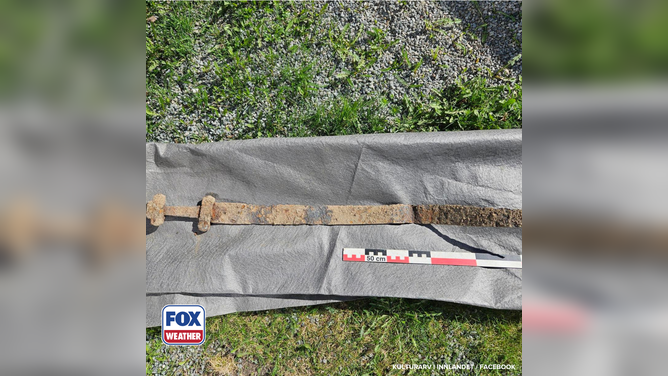
A 1,300-year-old Viking-era sword was uncovered in Norway early this month.
(Kulturarv i Innlandet / Facebook)
It turned out to be a large sword from around 1,300 years ago, from the Merovingian Period, which marks the beginning of the Viking era.
The sword is known as a “negget,” meaning it is only sharp on one side.
SEE IT: RARE GREEK COIN FROM 3RD CENTURY BC DISCOVERED BY 13-YEAR-OLD IN BERLIN
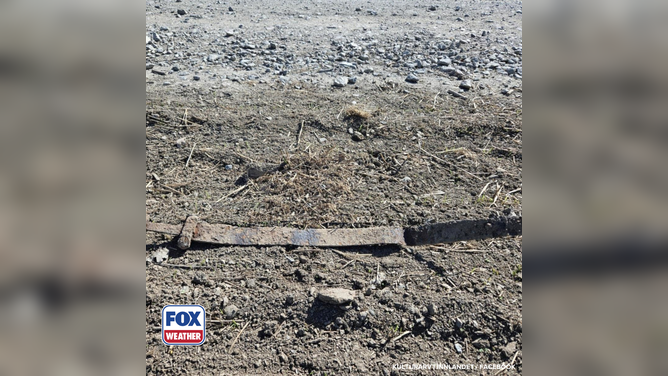
Archeologists in Norway dug out a Viking-era sword from 1,300 years ago.
(Kulturarv i Innlandet / Facebook)
According to Professor of History at Yale University, Paul Freedman, the Merovingian era is an example of barbarian kingship in the post-Roman world, marked by the absence of a strong government.
Photos from the municipality showcase the large sword in remarkable condition for its age, with half of its length measuring 50 cm.
When compared with early representations of the weapon, it is clear why this era of kingship lasted over 250 years following the fall of the Western Roman Empire in the 5th century.
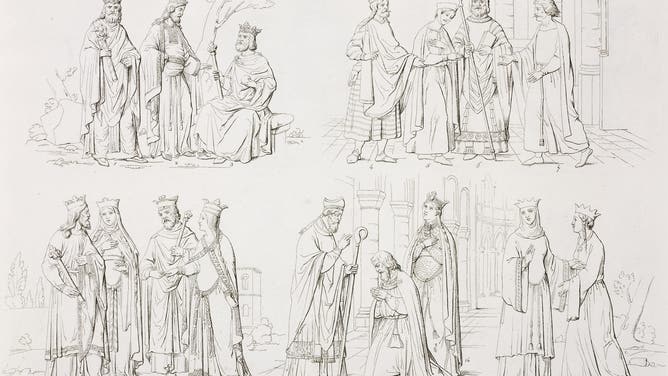
French Merovingians (5th-8th century): Clovis, Clotilde, St Remi, other kings and queens of the first French dynasty, dukes, counts and countesses, France, engraving by Bernati from a drawing by Guglielmi, from Il costume di tutti i tempi e di tutte le nazioni (The costume of all times and all nations), Middle Ages, Plate 63, by Lodovico Menin, 1833-1843, Padua.
(Icas94 / De Agostini Picture Library / Getty Images)
According to popular theories, the Merovingians are identified as the descendants of Jesus Christ, who escaped crucifixion and fled to France with a pregnant Mary Magdalene, according to History.com.
SUNKEN WWI SHIP ‘TAMPA’ FOUND OFF ENGLISH COAST, SOLVING CENTURY-OLD MYSTERY
According to a release from the Inland County Municipality, the group that had stumbled on this relic wisely contacted archeologists to share what they found before taking further action.