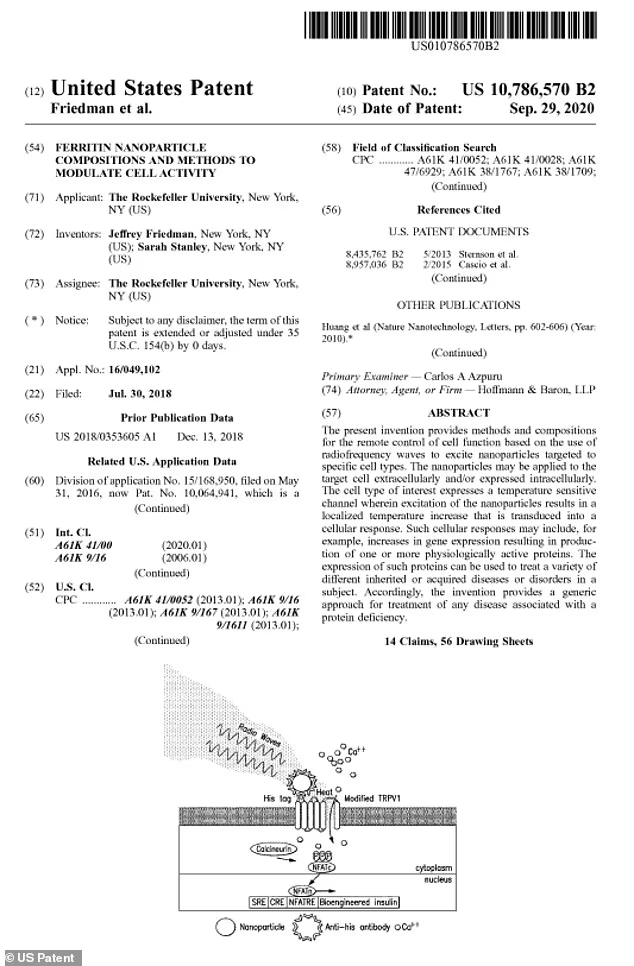
A resurfaced patent awarded to an elite biomedical research institution in New York City details technology described as enabling the ‘remote control of cell function.’
Granted to the Rockefeller University in 2018, the patent describes using tiny engineered particles called nanoparticles that can be directed toward specific types of cells either from outside the cell or by being placed inside it.
When exposed to radio waves, the particles heat up and activate temperature-sensitive channels within the targeted cells.
That heat then triggers a biological response inside the cell, such as switching on certain genes or prompting the production of proteins.
According to the patent, the technology could potentially be used to treat a wide range of diseases and disorders by remotely activating specific cellular functions inside the body.
While the technology could potentially revolutionize healthcare, the patent has sparked fears and conspiracy theories online because of the university’s historic ties to the influential Rockefeller family.
The dynasty has long been the subject of claims alleging secretive influence over global politics, finance and the creation of a so-called ‘New World Order.’
However, there is no evidence that the technology was designed for mind control or population surveillance, and the patent describes potential medical applications aimed at treating disease by activating specific cellular responses.
Granted to the Rockefeller University in 2018, the patent describes using tiny engineered particles called nanoparticles that can be directed toward specific types of cells either from outside the cell or by being placed inside it.
Even so, social media users have speculated online that the technology could theoretically be misused for neurological or behavioral manipulation, despite the patent focusing on medical research applications.
One X user wrote: ‘The global elites’ plans have been blown wide open. Does the patent registered in the name of Rockefeller University spell the end of humanity’s biological independence?’
The claims circulating online are not supported by the evidence presented in the patent itself.
The Daily Mail has reached out to the Rockefeller University for comment.
The patent describes a system called ‘Nanoparticle Induced Circuit Excitation’ (NICE), which uses radio waves and tiny magnetic particles to remotely activate specific cells inside the body.
In scientific terms, the patent’s use of the phrase ‘remote control of cell function’ refers to remotely activating biological responses in targeted cells using radiofrequency signals.
The technology works by attaching engineered nanoparticles to certain cells. When those particles are exposed to a radiofrequency field, they heat up slightly and activate temperature-sensitive channels inside the targeted cells.
That activation can trigger biological responses such as turning genes on, producing proteins, releasing hormones like insulin or activating neurons.

In scientific terms, the patent’s use of the phrase ‘remote control of cell function’ refers to remotely activating biological responses in targeted cells using radiofrequency signals
Researchers said the system could potentially be used to treat diseases including diabetes, Parkinson’s disease, chronic pain, stroke, hormone disorders, immune disorders and some neurological conditions.
The patent also describes the use of a heat-sensitive protein called TRPV1, sometimes referred to as the body’s capsaicin receptor, because it reacts to heat in the same way the body responds to spicy foods like chili peppers.
Scientists engineered cells so the TRPV1 channels would open when nearby nanoparticles were heated by radio waves, effectively allowing researchers to switch cellular activity on remotely.
The patent describes several experiments in mice designed to test whether scientists could remotely trigger biological changes inside the body using radio waves and nanoparticles.
In one study, researchers implanted specially engineered cells into mice that were designed to release insulin when activated.
The cells were equipped with temperature-sensitive channels and tiny iron oxide nanoparticles.
When the mice were exposed to a radiofrequency magnetic field, the nanoparticles heated up and activated the cells, causing them to release insulin.
Researchers said this lowered the animals’ blood sugar levels without surgery or implanted electrical devices.
Charts included in the patent showed blood glucose levels dropped rapidly after the mice were exposed to the radiofrequency signal, while insulin levels increased.
The patent also describes experiments involving brain cells linked to reward and feeding behavior. Scientists said the technology could remotely activate specific neurons in the midbrain and hypothalamus, areas associated with appetite, motivation and dopamine signaling.
Other mouse experiments tested stem cells engineered with the system, showing researchers could remotely activate certain cellular functions after exposing the animals to radiofrequency waves.
The patent further states that the nanoparticles could either be injected into the body or genetically engineered directly into cells using ferritin, a naturally occurring iron-storage protein found in humans.
Researchers also tested repeated radiofrequency exposure in mice and monitored body temperature changes to determine whether the system could safely activate targeted cells without overheating surrounding tissue.
According to the patent, the overall goal was to create a non-invasive method for remotely activating targeted cells inside the body for potential medical treatments such as diabetes, neurological disorders and hormone-related diseases.