Wearing bling on your teeth is commonly associated with rappers and hip–hop artists – but a medieval Scotsman also had a gold–tinted smile, a new study reveals.
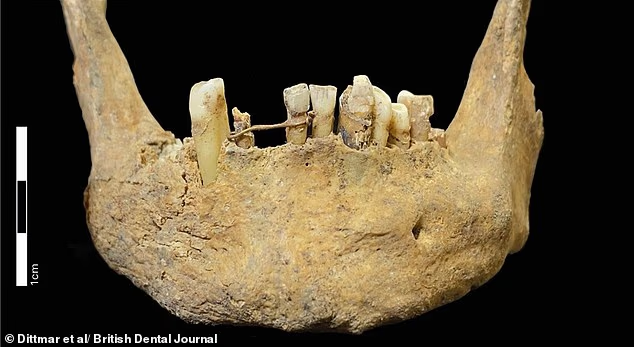
Experts have discovered a 20–carat gold dental bridge on a jaw belonging to an individual who lived around 500 years ago in Aberdeen.
This represents the earliest known example of restorative dentistry in Scotland – and appears to be the first evidence of gold used in the mouth in the UK.
While the ligature would have been used to stabilise a tooth or replace a lost tooth, experts said this individual likely also used it to boost their appearance.
Today, some people wear decorative covers over their teeth made from gold, silver or diamonds – colloquially known as ‘grillz’.
They became popular in the 1980s and serve as a fashion statement expressing wealth, with celebrities including Pharrell Williams, Lil Wayne and even Madonna known to wear them.
This particular Scottish individual was probably a rich member of medieval society, the researchers wrote in the British Dental Journal.
They added: ‘Given the social importance of an individual’s appearance during the Late Medieval and Early Modern era as an outward expression of their moral character, it is likely the rationale for undergoing this procedure extended beyond retaining masticatory abilities and oral function.’
The researchers discovered a 20–carat gold dental bridge on a jaw belonging to an individual who lived around 500 years ago in Aberdeen


Madonna has been known to wear a blingy cap over her teeth. Pharrell Williams is also renowned for his sparkly ‘grillz’
For the study the team, from the University of Aberdeen, re–analysed the skeletal remains of 100 individuals who were excavated from St Nicholas Kirk in 2006.
Among the remains they found a jaw with a gold ligature connecting some of the teeth with one missing from the centre.
This meant it likely acted as a bridge, they said, holding in a prosthetic tooth of some kind or keeping a loose tooth in place.
Analyses indicated the individual was a middle–aged man buried between 1460 and 1670.
Certain marks on the teeth suggested the ligature had been in place for a significant time before the man died.
Closer inspection revealed the wire was made from 20–carat gold alloy, likely produced by one of the local goldsmiths at the time.
Since dentistry was not officially established as a profession until the 19th century, it’s likely this bridge was inserted by a ‘semi–skilled practitioner such as a jeweller, barber or dentatore (individuals that specialised in teeth)’, they said.
They believe that alongside maintaining day–to–day function, the man may have been swayed by social pressure to keep his teeth intact.

Certain marks on the teeth suggested the ligature had been in place for a significant time before the man died

Closer inspection revealed the wire was made from 20–carat gold alloy that was secured in place using a twist
‘The underlying reasons for undergoing this procedure were likely multifaceted,’ they wrote.
‘During the Late Medieval and Early Modern periods, an individual’s physical appearance was believed to be indicative of their individual character.
‘The appearance of a person and their perceived health was linked to one’s sins.
‘As such, the social importance of an individual’s smile encouraged those who were able to afford such treatments to seek them out.’
Before the establishment of dentistry as a profession, those in need of treatment sometimes sought relief from a ‘tooth–drawer’, who were often carnival performers that travelled around the country peddling methods for ‘painlessly’ extracting teeth.
Within early modern Scottish communities, the administration of most health care was undertaken by local women who would pull teeth, as well as provide herbal medicine, prayers and charms.
Various remedies for oral–health related concerns have been identified in written sources. For example, local treatment for toothache on the Isle of Skye included green turf heated with embers applied to site of pain.
Meanwhile, accounts from Aberdeen indicate that one local treatment for abscesses was a cow dung poultice.
‘For certain ailments, specialist materials or appliances were required,’ the researchers wrote.
‘As is seen in this case, gold alloy wire was, and still is, a preferred material in restorative and conservative dentistry due to its resistance to corrosion and tarnishing and biocompatibility.
‘Of the 100 individuals that were excavated from inside the East Kirk of St Nicholas that dated to the Early Modern period, the individual presented here was the only one with clear evidence of dental work.
‘The rarity of this find indicates that such procedures were out of reach for most of the inhabitants of Early Modern Aberdeen. It is likely that the cost of the gold was a barrier to most.’