With Spring now well underway, green-thumbed gardeners will be keen to give their seedlings the best start possible.
But gardening experts at Which? say that you might be killing your plants with kindness.
If you water your plants every day, you are actually giving them the worst possible treatment.
In a side-by-side test, Which? found that plants which got a daily shower from the watering can were smaller and less healthy than those watered less frequently.
Although peat-free composts tend to dry out faster than less eco-friendly peated soils, it’s easy to overwater young plants and wash out the fertiliser in the compost.
Even plants that were left to wilt before watering grew up faster and healthier in six weeks compared to those which got daily water.
Adele Dyer, principal researcher for Which?, says: ‘Always check your pots before you water. Overwatering will wash away the fertiliser, and plants will suffer.
‘The cheapest way to become a master of watering your plants is to get used to feeling the compost and picking up your pots, provided they’re small enough.’
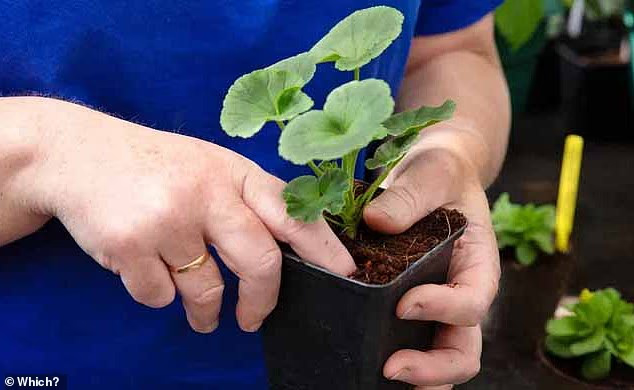
Gardening experts say that you are probably watering your plants too often. The best method is simply to put your finger in and feel the soil
Researchers from Which? tested tomatoes, pelargoniums, and petunias over a six-week period to find the best watering method.
The young plants were either watered every day, watered when the gardeners thought they needed it, or when a colour-changing water indicator said they were dry.
The watering indicators were either the SUStee Watering Indicator or the Westland Watering Indicator, which are both supposed to help gardeners judge when the soil needs water.
As an extra factor, some of the plants were potted with either synthetic or natural water-retaining substances, which are meant to reduce how often a plant needs watering.
Finally, Ms Dyer and the team compared watering from above with a watering can and soaking the plants from below in a tray or bowl of water.
As the plants grew, they were then measured weekly to see how tall they had become and how healthy they appeared.
This trial revealed that the common habit of daily watering could be ruining your plants’ chances of success.
The researcher said that this method produced ‘terrible pelargoniums’ with leaves that turned scarlet due to the lack of nutrients.

Which? found that colour-changing water indicators lead to plants being watered a little bit less often and growing a little smaller than those watered by judgment alone
Likewise, petunias which were watered every day grew yellow leaves as they were starved of fertiliser and their coir pots disintegrated from overwatering.
Watering every day did produce tall tomatoes, but the plants suffered from a lack of nutrients by the end of the trial and weren’t as healthy as those watered less frequently.
Overall, the best method was simply to put your finger in the soil or judge the weight of the pot and decide for yourself when they need watering.
This reduced the number of days that the plants needed watering across the six-week trial to just 18.
Plants using water sensors were watered a few less times over the trial period, just 14 on average, but were marginally smaller by the end.
Ms Dyer says: ‘While you learn how they should feel, you can use a water indicator to give you more clues as to how your plant is faring.’
Likewise, water-retaining substances also helped to reduce how often a plant needed watering to just 14 times when judging by touch and weight.
However, there was no difference in terms of health or size when using these products.

Watering from overhead every day led to the smallest and least healthy plants, with petunias and pelargoniums watered in this way both showing discolouration due to lack of nutrients
The one technique which did make a big difference was watering from the bottom rather than pouring the water on top.
With tomatoes, this technique reduced the number of times that they needed watering from 32 to just 16, while producing plants that were just as big and healthy.
But it is worth noting that this will be a little less effective if you let the plant wilt before watering, since the very dry soil will take longer to soak up water from below.
If you do let your plants go this dry, Which? says to water overhead and let the water soak in thoroughly before giving one or two more doses.